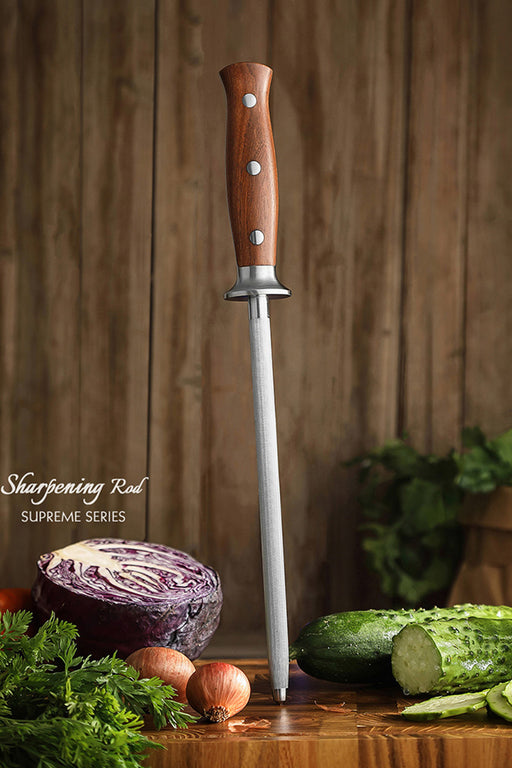
Maintaining the quality and sharpness of kitchen knives is essential for both professional chefs and home cooking enthusiasts. A honing rod is a critical tool in achieving this goal, ensuring knives remain sharp, efficient, and safe to use. While many might confuse honing with sharpening, understanding the difference and employing the correct techniques can enhance the longevity and performance of the knives. This article delves into the intricacies of using a honing rod effectively, offering guidance on proper maintenance and care for your culinary tools.
Understanding the Role of a Honing Rod
A honing rod, also known as a honing steel, is a vital instrument in knife maintenance. Contrary to popular belief, honing does not sharpen the blade by removing metal. Instead, it realigns the microscopic teeth on the blade’s edge, maintaining its sharpness over time. This process is crucial for knives that see frequent use, as it prevents dulling and extends the period between professional sharpening sessions.
Key Benefits of Using a Honing Rod
- Realigns the knife edge for consistent sharpness.
- Prolongs the life of the knife by reducing the frequency of sharpening.
- Enhances safety by minimizing the risk of slips due to dull blades.
How to Use a Honing Rod Correctly
Proper technique is essential when using a honing rod to ensure the best results. Here is a step-by-step guide:
- Hold the honing rod vertically with the tip resting on a stable surface.
- Position the knife at a 15 to 20-degree angle to the rod.
- Start at the base of the knife blade, drawing it down and across the rod simultaneously.
- Maintain consistent pressure and angle throughout the process.
- Repeat the motion five to ten times on each side of the blade.
For more detailed instructions, explore advanced guides and tips on using a honing rod effectively.
Choosing the Right Honing Rod
The choice of honing rod can significantly impact the maintenance of your knives. Factors to consider include:
- Material: Common materials include steel, ceramic, and diamond-coated rods. Each offers unique benefits and should be chosen based on knife type and frequency of use.
- Length: The rod should be longer than the knife blade to ensure complete coverage during honing.
- Grip: A comfortable and secure grip is crucial for safety and precision.
Learn about our tailored solutions for selecting the best honing rod that suits your needs and preferences.
Maintenance Tips for Your Honing Rod
To ensure your honing rod remains effective, regular maintenance is recommended:
- Wipe the rod with a damp cloth after each use to remove any metal filings.
- Avoid using abrasive cleaners that may damage the rod’s surface.
- Store the rod in a dry place to prevent rust or corrosion.
For comprehensive maintenance strategies, discover expert strategies here.
Conclusion
Incorporating a honing rod into your knife maintenance routine offers numerous benefits, from enhancing sharpness to prolonging the lifespan of your blades. Understanding the correct techniques and selecting the appropriate tools can make a significant difference in your culinary experience. For more detailed insights and to find the right honing rod, find out more about this approach to knife care.